


English
Professor Ju-Ho Lee gives welcome remarks at Seoul Conference

24 Jul 2026

Professor Ju-Ho Lee, Professor of Practice, Mary Lou Fulton College for Teaching and Learning Innovation, Arizona State University
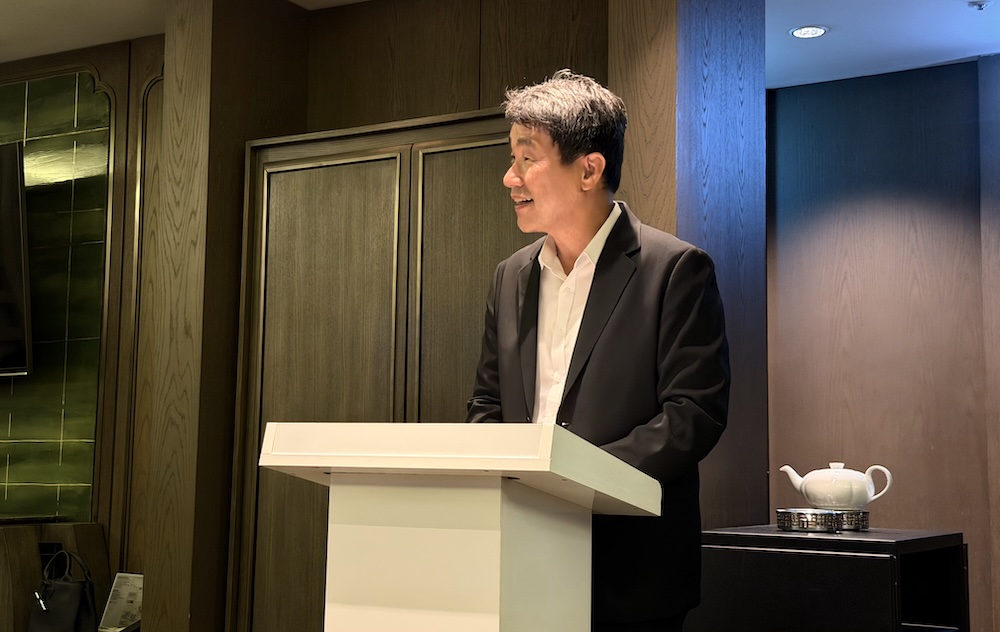

Good evening, everyone, and a very warm welcome to Seoul!
First of all, thank you to everyone who has traveled such a long way to be here tonight. Your presence means a lot to us, and we are truly grateful.
About ten years ago, in the spring of 2016, right here at the Four Seasons Seoul, the AlphaGo match against Lee Sedol captured the world's attention. AlphaGo's 4–1 victory marked a turning point, demonstrating that AI had surpassed human performance in one of our greatest cognitive challenges.
Now, ten years later, we are gathering in this very same place to ask a different question:
How can AI help us strengthen what makes us most human — our connections with one another?
For generations, fostering meaningful human connections has been one of education's greatest challenges.
I believe it is deeply meaningful that leaders and experts from diverse fields have come together to explore how we can harness AI to place human connections at the very center of education.
Thank you again to all 24 of you for being part of this important journey.
Since many of us are meeting for the first time, I'd like to take a few minutes to introduce everyone before we enjoy dinner together.
Let me begin with our friends from the Yidan Prize Foundation, whose generous support has made this conference possible.
First, I would like to recognize Secretary-General Bruce Au. His enthusiasm, encouragement, and unwavering support have been instrumental in making this conference a reality. Thank you, Bruce.
I am also delighted to welcome my longtime friend Elizabeth King, former World Bank Director of Education. I have had the privilege of serving alongside her as a Yidan Prize judge, and it is wonderful to have her with us this evening.
We are also joined by three wonderful colleagues from the Yidan Prize Foundation: Jessica Wong, Director of Communications; Michelle Zhang, Senior Manager of Global Engagement; and Eliza Cheung, Communications Manager. Thank you all for being here.
I would also like to extend a special welcome to Dr Culpepper, Professor at the University of Illinois Urbana-Champaign and President of the Psychometric Society. His presence is especially meaningful to us. As a leading figure in psychometrics, he joins us in one of the most important and challenging missions before us: understanding and measuring human connection.
I would also like to warmly welcome Pablo Fraser, Chief of Education Monitoring for UNESCO's Global Education Monitoring Report, and Maida Pasic, Senior Education Advisor for UNICEF's Global Education Practice.
The participation of leaders from the Yidan Prize Foundation, Psychometric Society UNESCO, and UNICEF adds tremendous significance to this gathering. Your presence reminds us that the future of education is truly a global endeavor.
Next, I would like to introduce our distinguished colleagues in medical education.
I believe the transformation we are seeking in education is not something entirely new. In many ways, medical education has already been leading the way. In medicine, human connections are not simply desirable — they are essential, because they directly affect people's lives.
I believe one of the fastest ways to strengthen human connections throughout education is to learn from the lessons and innovations that have already taken place in medical education.
First, let me introduce Yoon Soo Park, Head of the Department of Medical Education at the University of Illinois Chicago. Many of you have already read the concept note for this conference. Yoon Soo is the person who wrote it, and his vision has inspired this entire gathering.
Joining him is his colleague Brian Gin, Associate Professor at the University of Illinois Chicago.
We are also honored to welcome Christy Boscardin, Director of Artificial Intelligence and Student Assessment at the University of California, San Francisco School of Medicine. We look forward to learning from her pioneering work at the intersection of AI and medical education.
Sean Hogan, Vice President for Research and Evaluation at the Accreditation Council for Graduate Medical Education, is also with us this evening. It is a privilege to have a leader from one of the world's most respected organizations in graduate medical education.
We are also delighted to welcome Martin Pusic, Associate Professor of Pediatrics and Emergency Medicine at Harvard Medical School. Martin has made important contributions to medical education through his work on learning, assessment, and clinical training. Unfortunately, his flight has been delayed, so he will be joining us a little later this evening. Martin, we look forward to welcoming you when you arrive.
I would also like to introduce Betheny Gross, Research Director at Western Governors University Labs. Betheny has been leading innovative work on measuring and coaching human connections, particularly in nursing education. I believe her experience offers valuable lessons for K–12 education as well.
Now let me introduce my colleagues from Arizona State University.
Since joining ASU earlier this year, I have been deeply impressed by its openness to new ideas and new people. Every day, I see faculty crossing disciplinary boundaries to solve important problems together. I believe that spirit is exactly what has brought all of us together here.
First is Robin Lake, Director of the Center on Reinventing Public Education. Robin has devoted her career to improving public education in the United States, and I hope we can all benefit from her wisdom and experience.
Next is Kathleen King Thorius from the Mary Lou Fulton College for Teaching and Learning Innovation at ASU. Kathleen has made outstanding contributions to inclusive education and is providing national leadership in advancing innovation across American public education.
I would also like to recognize Krista Ratcliffe and Kyle Jensen, both professors at ASU. They are internationally recognized scholars of rhetoric, especially the art of listening. I believe the wisdom of rhetoric — from Aristotle to the present day — has much to teach us about strengthening human connections. Thank you both for bringing your perspectives to this conversation.
Last, but certainly not least, among our international guests, I would like to welcome Isabelle Hau, Executive Director of the Stanford Accelerator for Learning.
Isabelle's influential work on Relational Intelligence and Human Connections has been a major source of inspiration for this conference. We are truly delighted that you could join us.
Finally, let me introduce our distinguished participants from Korea.
As many of you know, Korea has experienced one of the fastest educational transformations in modern history. Today, many of Korea's educational leaders are working to ensure that the age of AI not only makes learning smarter, but also makes education more human.
First, I would like to introduce Professor Ji Hoon Ryoo of Yonsei University, Conference Chair of the International Meeting of the Psychometric Society (IMPS). It is especially meaningful that our conference is being held alongside IMPS, which brings together more than 500 of the world's leading experts in educational measurement and psychometrics. Professor Ryu has played a key role in making this possible.
Next, I am pleased to introduce Professor Heejin Kim from the College of International Studies at Kyung Hee University and Professor Hye-Ryeon Shin from the Department of Digital Contents Design at Myongji University. As we seek to develop new tools for measuring, coaching, and teaching human connections, I have great expectations for their expertise, creativity, and passion.
Finally, we are joined by two distinguished business leaders who share our interest in the future of education and are exploring opportunities to support this initiative. Please join me in welcoming Ms Yeonjea Kim, CPO of Kakao Corporation, and Ms Chunnoon Song-e Song, Senior Advisor at Hyundai Marine & Fire Insurance.
That concludes our introductions.
Ten years ago, in this very hotel, we witnessed a milestone in the history of artificial intelligence.
Perhaps, this evening, we are witnessing the beginning of a new chapter — one in which AI helps us become not only smarter, but more deeply connected as human beings.
Thank you all once again for being here.
Please enjoy the dinner, enjoy the conversations, and welcome to Seoul.

Share the blog with others


