


English
A conversation about the future is a conversation centered in Africa

22 May 2026

Sala Ba, ARED and Lucy Lake, Yidan Prize Foundation
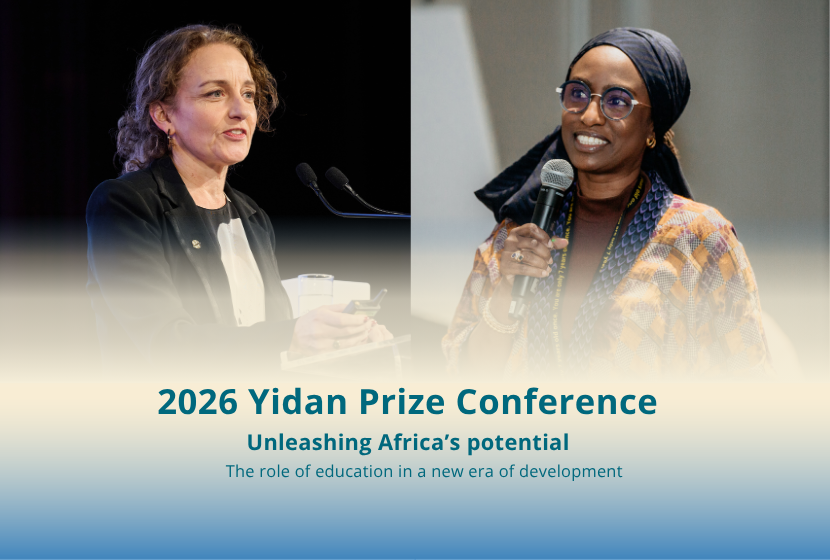

The African continent is home to the world’s youngest and fastest-growing population. By 2030, around one in five of the world’s population will live there, including about 42% of all young people. By 2050, that’s projected to be 25%.
That growth is happening against a backdrop of geopolitical turbulence, declining global support for education, and with traditional aid systems under strain. That presents serious challenges — but the response across the continent is to embrace new possibilities.
Africa’s place in this conversation is clear: it must be understood on its own terms, defined by its potential, innovation, and leadership.
Africa is spurring a new era of development through education innovation
Education is the key driver of every marker of human progress, from the economy to health and nutrition. African innovation in education is already translating into large-scale systems change. This momentum is gathering pace, backed by both government commitments and continent-wide movements.
It’s time we celebrated these efforts. It’s also time we reframed how we talk about education in Africa — and which interventions we value.
We need to put African challenges in context and shift focus to locally led solutions
For a long time, the narrative about education in Africa has focused squarely on deficits. We can’t ignore that 118 million children and young people in Africa are out of school, while millions more leave education unprepared for the labor market. But we also need to acknowledge the context: dominant aid programs have often distorted systems, fostered dependency, and favored external initiatives.
Today’s story is about solutions rooted in local knowledge, leadership, and capacity. It should recognize responses designed to meet young people where they are, with particular attention to those left out or left behind. This is where the true transformative potential of education lies.
We’ll hear directly from African changemakers across diverse settings
The Conference will shine a light on solutions that align with government-led agendas, and the research and innovation — and partnerships — that shape them.
ARED’s work scaling multilingual foundational learning in Senegal and beyond brings many of these elements together, giving us all a valuable reference point. The Conference offers the chance to learn from ARED and its partners, and from the Ministry of National Education, whose MOHEBS reform (Modèle Harmonisé d’Enseignement Bilingue au Sénégal) places mother-tongue-based bilingual education at the heart of foundational learning.
Our speakers and contributors offer reflections from across the continent, including:
-
Dr Obiageli Ezekwesili — economic policy expert, former World Bank Vice President, and former Minister of Education in Nigeria.
-
Professor Kwame Akyeampong, whose research highlights multilingual foundational learning as a source of dignity and connection.
-
Angie Murimirwa, CEO of CAMFED, sharing insights from a network of African women leaders on what enables the most marginalized young people to succeed in and beyond school.
-
Albert Nsengiyumva, Executive Secretary of ADEA, grounding our discussions in Africa’s continent-wide education agenda.
-
Partner organizations from beyond Africa, including Asia and the Middle East, illustrating the power of learning and collaboration within the education landscape and across contexts.
Our thanks to partners who are hosting different sessions throughout our three days together: Echidna Giving, Gates Foundation, Global Partnership for Education, Imaginable Futures, International Education Funders Group, Mastercard Foundation, and UNESCO International Institute of Educational Planning.
Sessions will be hands-on and welcome many different perspectives
We’ve intentionally kept plenaries to a minimum and focused on roundtables and working groups so that a broader range of experience and expertise can be heard.
Beautiful Soul, our Conference facilitator and change partner, will help bring fresh perspectives to the discussions, spark new connections, and make sure we leave inspired by the spirit of Dakar.
As a starting point, our Conference coordinators offer some reflections:
Sala Ba, ARED
"As a former Deputy Director of Education for USAID in Senegal, I had the privilege of spending the past decade working alongside ARED and the Ministry of National Education to advance foundational learning across the country. Together, we helped make MOHEBS a reality in classrooms nationwide — a milestone I count among my proudest professional achievements. It offered a concrete vision of what an education model truly rooted in children's languages, cultures, and a country's values should be, and a tangible demonstration of how the right interventions positively shape children's learning trajectories and life outcomes.
We now find ourselves at a pivotal moment, when shifts in global aid are reshaping and redirecting priorities, and challenging the partnerships that have taken us so long to build. A moment that also presents a real opportunity — one that I feel fortunate to be part of.
The Yidan Prize Conference is Senegal's moment to take stock, carry forward the lessons of the past decade with clarity and honesty — holding on to what worked, acknowledging what did not, and building towards something more resilient and more promising, sustained by the kind of committed partnership that has always been at the heart of progress here.
Together, we have the opportunity to shape what comes next. I look forward to the conversations ahead."
Lucy Lake, Yidan Prize Foundation
"As a Yidan Prize laureate and now Director of Global Engagement, I have come to value the importance of highlighting the often-unseen work — the quiet force — that drives development. This work takes shape within and alongside government systems, values local expertise and resources, and creates space for a new generation of leaders.
My three decades with CAMFED showed me that progress is not only about what works, but how it works: how to harness the creativity and commitment needed to help the most marginalized children get into school and thrive there, and how to embed that support within education systems. That ‘how’ — the quiet force — lies in the strength of human connection. It is what enables us to come together, share wisdom and resources, and tackle even the toughest challenges. Through those connections, each of us can find our role and contribute to a broader movement for education.
This Conference is a chance to highlight that quiet force, strengthen human connection, and reflect on how we can each contribute to this wider movement."
Let’s embrace our shared vision and the power of working together
Francophone West Africa is a growing hub for interregional collaboration in education — demonstrating powerfully how strong connections and mutual learning help us navigate change together.
We look forward to coming together on 29 June united by our conviction that education is critical to unlocking Africa’s full potential — and with it, a brighter future for everyone.
Explore the Conference program here.

Share the blog with others


