


English
Move between worlds: A brighter future unfolds at the intersections

24 Jan 2026

Dr Charles CHEN Yidan
We’ve never lived more interconnected lives — or felt more divided. Separated by belief, culture, and access, we turn inward to master our own fields in the hope of cutting a predictable path forward. Reality, though, is filled with surprises, and we can’t clear roadblocks by simply mastering our own fields.
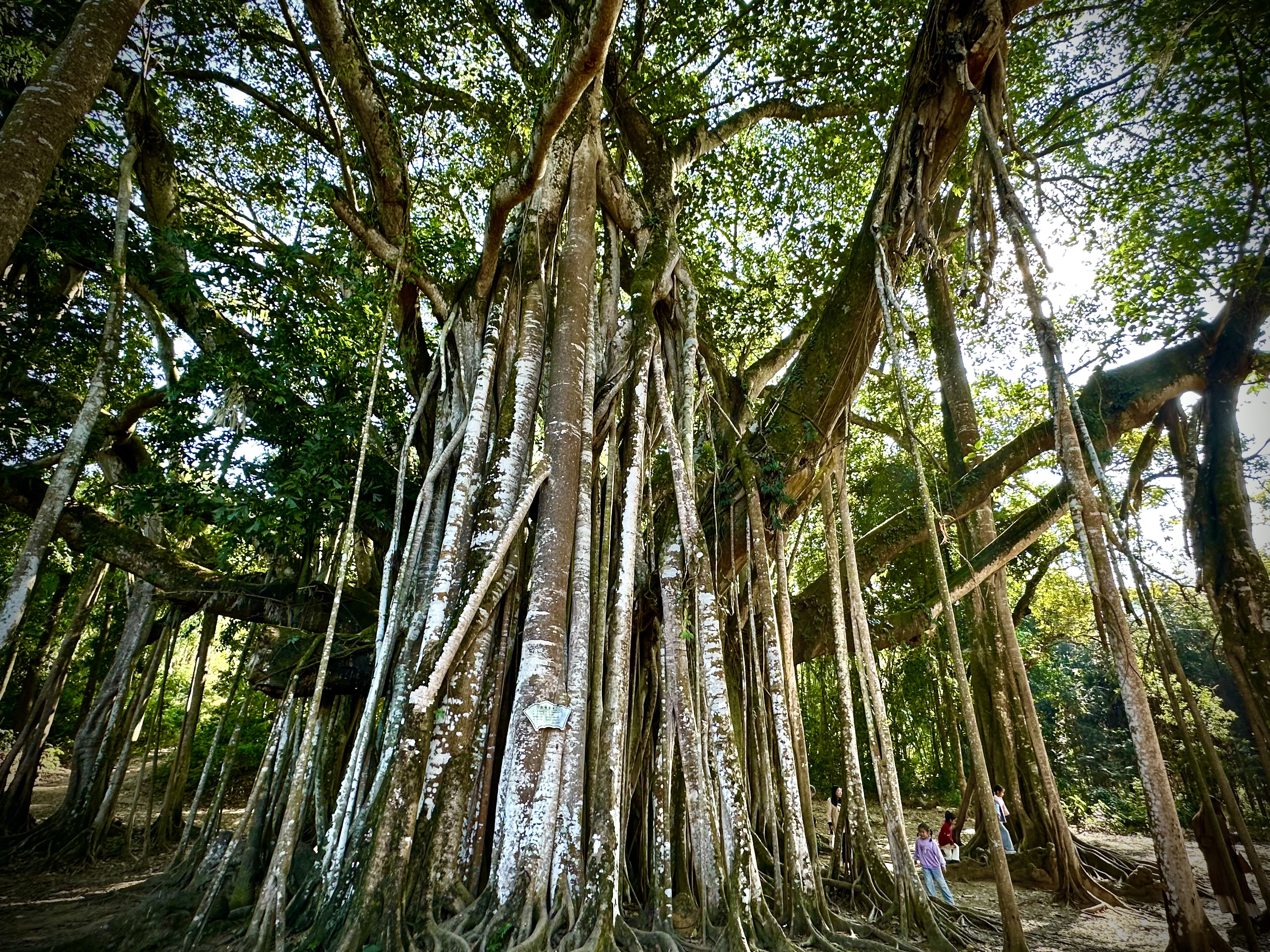
Education clears the way, but not alone. To forge paths forward, we need to combine strengths, and bridge differences. Vibrant ecosystems thrive through connection. Forests flourish as roots intertwine; rivers sustain life as they link mountains to seas. So too do we break through our own limits by the flow of ideas. When perspectives meet, new possibilities take root.
The task in front of us is not simply to advance within our own worlds, but to move between them. To listen, communicate, and collaborate across lines of difference. At the Yidan Prize Award Ceremony last month, the 2025 Yidan Prize laureates showed what it means to move between worlds in practice. To dismiss limits by letting ideas flow across boundaries, with knowledge as the passage, not a possession.
Turning borders into pathways
Mamadou Amadou Ly, Executive Director of Associates in Research and Education for Development (ARED), works where the worlds of home and playground, school and system lack a common language to connect them.
In countries like Senegal, rich with local and regional languages, many children arrive at school to be taught in an official language they don’t know. In response, Mamadou has led the ARED team to develop bilingual approaches that transform learning outcomes. With ARED’s programs, children learn first in a familiar Senegalese language, before being introduced to French.
This turns linguistic borders into pathways, opening doors to foundational literacy and numeracy for children and youth across West and Central Africa. His approach proves that when education meets cultural and social context, it restores dignity, strengthens identity, and gives every learner a fair chance to cross into new futures.
Crossing disciplines and conceptual boundaries
Professor Uri Wilensky moves between a different set of worlds: the world of computational models and the world of complex challenges like climate change, pandemics, and economic instability.
A leading voice in agent-based modeling and creator of the free open-source platform NetLogo, he has equipped learners — from school students to researchers — with tools and skills to explore how individual behaviours ripple into large-scale, non-linear patterns. In doing so, he invites them to step out of textbook thinking into solving real-world problems.
Uri’s work embeds computational exploration into curricula so that learners can test ideas and simulate possibilities. A student might model how a virus spreads through a city, or how individual choices shape a shared ecosystem, like a simple traffic jam. In the process, they cross between mathematics, computer science, natural science, and social science. His vision is not of computers as a separate world, but as a shared language that helps everyone engage thoughtfully with the complexity of their society.
Together, Mamadou Amadou Ly and Professor Uri Wilensky remind us that moving between worlds is at the heart of transformative education. One crosses linguistic and cultural frontiers so that every child can fully engage in classrooms, while also gaining access to wider opportunities. The other crosses disciplines and conceptual boundaries so that every learner can understand and help tackle the complex challenges that define our era.
Humility to learn, courage to let go, curiosity to connect
To move between worlds requires humility to learn, courage to let go, and curiosity to connect. The 2025 Yidan Prize Summit in December encapsulated this spirit of lifelong learning, where Yidan Prize laureates shared their stories of turning points and pivotal moments at the Hong Kong Palace Museum.
Dr Rukmini Banerji, Professor Usha Goswami and Angeline Murimirwa’s stories showed us what it means to transcend boundaries — moving between classrooms and communities, between research and reality, between individual and impact. Real progress happens when we carry ideas across borders: when policy makers listen to teachers, when teachers become researchers, when learners become co-designers of the systems that shape them.
On this International Day of Education, UNESCO urges us to empower young minds. Young people are not simply successors of a changing world — they are creators, thinkers, and partners in the solutions we urgently need. Empowering young minds means ensuring equitable access to new tools that expand our limits beyond imagination. It means reshaping education systems to unlock human potential. And it means moving beyond preparing learners for the world — to partnering with them as they shape it.
As I write, the Yidan Prize’s tenth year approaches. The Prize has always been a home for different worlds: diverse disciplines, cultures, and perspectives shaping the future together. As we mark this milestone, we welcome more voices - from more worlds to join us.
——
This article originally appeared on South China Morning Post 24 January 2026.

Share the blog with others


