







Citation
When we speak of a nation’s future, we inevitably think of its people’s skills: the confidence, creativity, and resilience that its children acquire in school — to build healthier, more prosperous lives than the generations before them. For decades, the global consensus on how to build human capabilities was deceptively simple: build schools, hire teachers, and track enrolment. If children sat at desks for a given number of years, educational progress — we assumed — would naturally follow.
Yet in the poorest corners of our world, families continue to face compounding barriers — acute health crises, severe economic instability, and under-resourced classrooms. Despite rising attendance, millions of children leave school unable to read a simple sentence or compute basic arithmetic. It took a development economist to confront the global development community with an uncomfortable truth: schooling is not the same as learning.
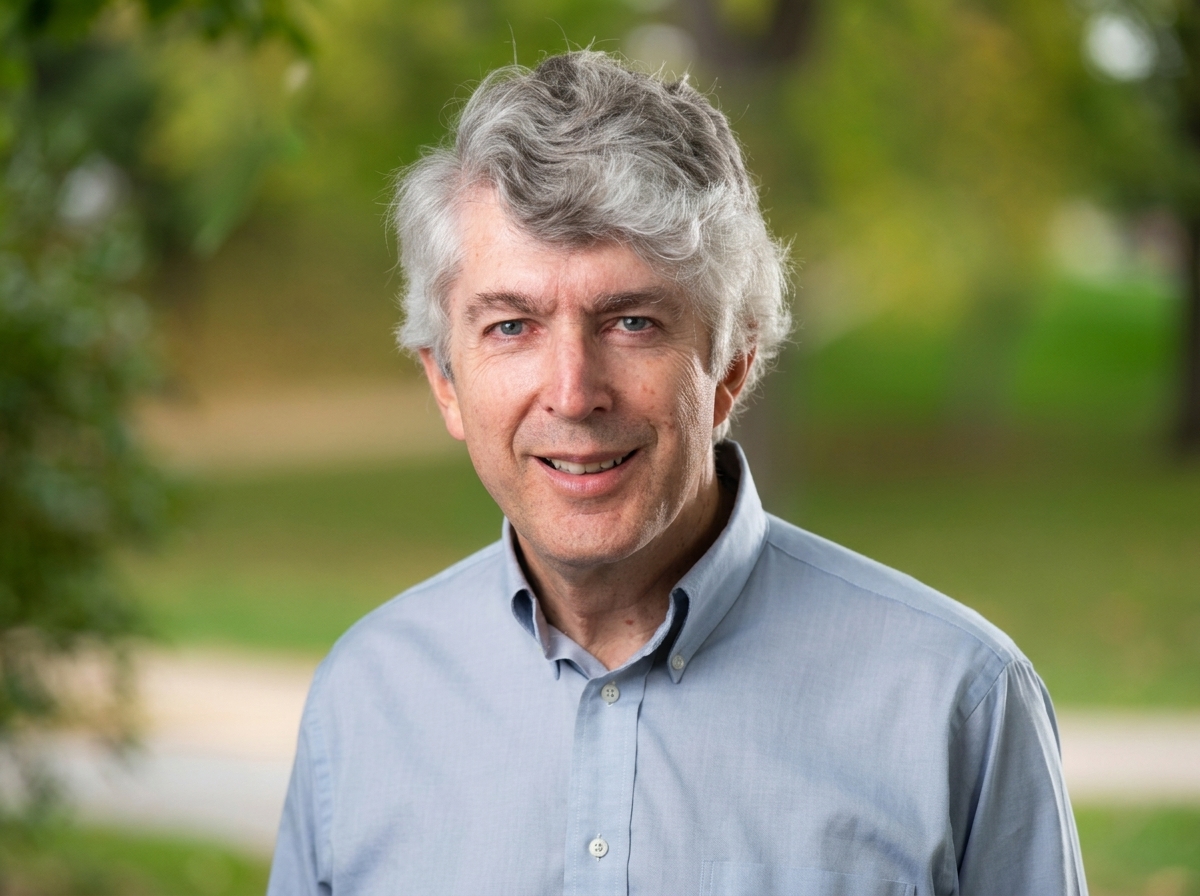
Today, we honor Professor Paul W. Glewwe, a scholar who, for nearly 40 years, has been one of the world's most influential researchers dedicated to understanding the education problems of the developing world. His life’s work addresses the question central to the mission of the Yidan Prize: how can developing countries make their schools more effective at increasing their students' learning?
Rewriting the economics of education
Professor Glewwe’s contributions began by challenging the foundational ways development economists evaluate human capabilities. Before his pioneering work, economic models treated a year of schooling as a standard, uniform unit — assuming a year in a rural, under-resourced school yielded the exact same economic return as a year in a well-funded institution.
Professor Glewwe’s 2002 review article in the Journal of Economic Literature highlighted the early evidence behind what is now widely recognized as the global ‘learning crisis’. His synthesis argued that national governments and development agencies must reorient education policy from expanding school enrollments alone toward measuring, funding, and improving learning outcomes. His research demonstrated that the economic returns to education vary dramatically based on the quality of instruction across different levels, not merely the quantity of time in school — simply adding years to a child’s schooling without raising instructional quality yields diminishing returns for both individual income and national growth.
Beyond school-level inputs, Professor Glewwe’s research illuminated how family background and socioeconomic hardship constrain learning. He documented how malnutrition leads to stunting, limiting both the physical and mental development of children before they ever enter school. His research established a critical bridge between educational policy and poverty alleviation, proving that effective interventions must address the lived realities of poor households to break intergenerational cycles of disadvantage.
Furthermore, Professor Glewwe recognized before it became a mainstream economic priority that a child’s potential is not governed by cognitive test scores alone. He was among the first economists to bring socio-emotional skills — critical thinking, emotional regulation, and interpersonal resilience — into formal labor market analysis. By evaluating how both cognitive and socio-emotional capabilities command real value in the workforce, Professor Glewwe redefined educational success. His work proved that when schools nurture the whole child, they don't just generate test scores — they unlock sustainable socioeconomic mobility.
Methodological contributions
Great policy requires comprehensive, reliable data and unassailable analyses, and Professor Glewwe’s methodological contributions have fundamentally transformed how economists study poverty, education choices, and outcomes.
Early in his career, Professor Glewwe cast a light on the systemic barriers operating inside homes. He convinced us that to understand why learning fails, research inquiry must start at the household level. As a primary architect of the World Bank’s Living Standards Measurement Study (LSMS) surveys, Professor Glewwe pioneered the integration of rich educational and health variables directly into household survey design. This innovation allowed researchers to observe how family economics, parental literacy, nutrition, and living conditions interact to shape a child’s development. The LSMS data collection instruments, together with similar surveys that came later, remain the empirical foundation for poverty and inequality research in developing countries. By establishing common measurements, these surveys allowed data from different geographies to be compared to each other, becoming one of the most important sources for education research done on a national scale.
Further, long before field experiments became a dominant force in development economics, together with Professor Michael Kremer, he launched a series of field-based experiments and randomized controlled trials (RCTs) in Kenya to test what actually worked on the ground. Through these trials, Professor Glewwe demonstrated a commitment to selecting methodologies specifically tailored to the human question at hand. Aside from designing standard surveys and conducting RCTs, he even used self-portraits to measure the psychological attribute of hope in children to evaluate the impact of international child sponsorship programs.
A truly global footprint and education policy
What sets Professor Glewwe apart from most academic scholars is the extraordinary geographic breadth and practical diversity of his research. While many scholars specialize in one or two countries, or a narrow set of topics, Professor Glewwe’s work literally spans the globe — encompassing more than 15 countries across continents, showing us that socioeconomic context and history at the family, community, and national levels matter.
Consider the sheer scope of questions he has answered:
In Kenya, his landmark trials on textbooks and flipcharts revealed that standard instructional materials differ significantly in their cost-efficiency; that basic pedagogical materials, functional curriculum design, and teacher motivation often have higher returns on skill acquisition than high-cost infrastructure projects; and that struggling students require a home environment and targeted instruction that support classroom learning.
In Peru, where remote rural schools face high teacher turnover and the challenge of multi-grade classrooms, Professor Glewwe evaluated a nationwide teacher-coaching program. Rather than relying on standard one-off training seminars, he proved that embedding coaches directly inside classrooms — providing personalized observation and feedback — shifted teachers' daily pedagogical behaviors and delivered lasting gains in student reading and mathematics.
In Madagascar, where rapid enrolment gains have led to a fractured teaching corps of civil servants and temporary contract teachers, Professor Glewwe evaluated a nationwide school management reform. His analysis across district, subdistrict, and school levels revealed a vital truth for policy: administrative monitoring, without direct pedagogical support, will fail to move the needle on student learning.
By publishing these critical findings, Professor Glewwe saved governments from investing limited resources in superficial bureaucratic fixes, redirecting global attention back toward what directly happens between teachers and learners inside the classroom.
Through his work on China, Morocco, and the Philippines, he showed that improving education outcomes requires more than investment in schools, highlighting the crucial need for good health and good nutrition to make those school investments more effective. His research on China in 2016 explored the benefits of providing eyeglasses to vision-impaired primary school students. This became one of the key studies that drove China’s 2018 Myopia Control Program. In Morocco, his research highlighted that increasing mothers’ knowledge on health improved children’s nutritional status, ultimately leading to improved learning outcomes.
In Vietnam, a country that has captivated global attention by outperforming far wealthier nations on international test scores, Professor Glewwe set out to answer why. His research proved that Vietnam’s performance rests on the high baseline pedagogical skills of its teachers — explaining up to 64% of its performance advantage over peer countries — and a system that prioritizes universal foundational mastery over elite selection. Furthermore, Professor Glewwe led rigorous evaluations of Vietnam’s national Escuela Nueva curriculum reform, demonstrating how student-centered learning can significantly boost the socioemotional skills and critical thinking of disadvantaged ethnic minority children — while cautioning policymakers that curricular shifts require ongoing teacher coaching if learning gains are to endure long-term.
Professor Glewwe’s research contributions aren’t just for journal publications and citation numbers. They have directly shaped national policy. He collaborates directly with governments and education ministries, designing program evaluations around their specific policy constraints and goals. Because of this embedded approach, his work moves systems across every level — from classroom practices to national policies.
Mentorship and collaboration
Beyond his empirical findings, Professor Glewwe has shown a deep and lasting commitment to building research capacity. At the University of Minnesota, he has been a sought-after advisor for numerous graduate students, guiding the work of over 90 doctoral candidates in the more than 25 years that he has been teaching. Evidence of this collaborative ethos is the list of names of his co-authors in research outputs. This demonstrates a consistent, intentional inclusion of junior scholars and local researchers from the countries in which he works.
In an academic world that can encourage ego and hierarchy, Professor Glewwe stands out for his deep humility. He is celebrated by colleagues globally for his non-hierarchical spirit, his generous listening, and his quiet, relentless work ethic. He treats the local teacher, junior field assistant, government official, and graduate student with the same profound respect.
A worthy legacy
Transforming education systems and outcomes happens when uncompromising scientific rigor is coupled with a fierce commitment to make a difference in people’s lives. For nearly 40 years, Professor Glewwe has provided that rigor. He has given governments the evidence they need to spend wisely, teachers the tools they need to instruct effectively, and millions of vulnerable children the opportunity to learn, thrive, and escape the trap of intergenerational poverty. Country examples illustrate his approach to education research — measure and build sound evidence to understand the development problem, collaborate closely with national researchers to make meaning of that evidence, and engage governments to improve program and policy design for scale-up.
Through his methodological breakthroughs, his global policy leadership, his tireless mentorship, and his generous character, he has embodied the very highest ideals of global educational scholarship and leadership. These have earned him the Yidan Prize for Education Research in 2026.
Dr Elizabeth M. King
Panel Head, Judging Panel for Education Research, Yidan Prize




